
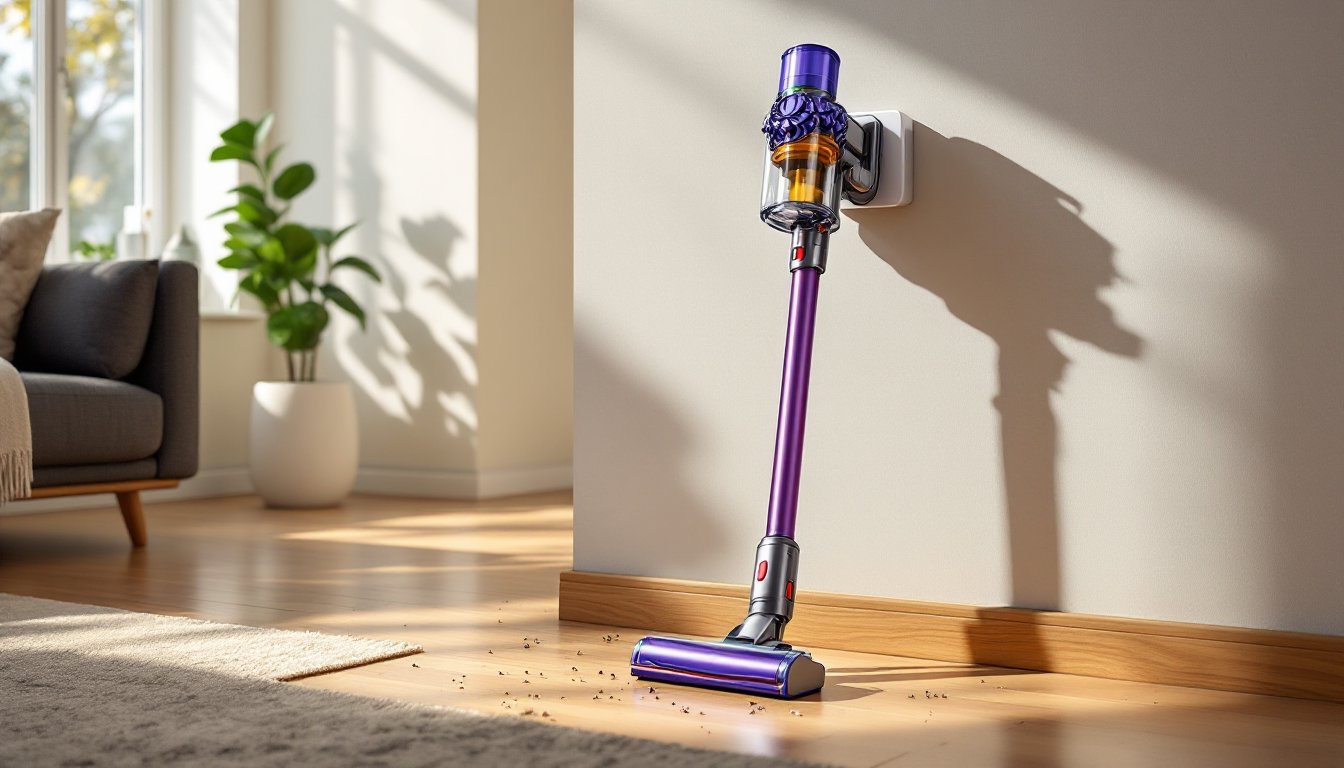
Dyson cordless vacuums have become a staple in homes where quick cleanup meets serious suction power. These machines aren’t just about ditching the cord, they’re about rethinking how vacuuming fits into a busy household. Whether you’re dealing with pet hair embedded in upholstery, crumbs scattered across hardwood, or dust bunnies hiding under furniture, the right Dyson model can turn a 30-minute chore into a 10-minute task. But with prices ranging from around $300 to over $700 and features that vary widely across models, choosing the right one takes more than browsing a product page. This guide breaks down the top Dyson cordless options, key features, and practical considerations to help homeowners match a vacuum to their specific cleaning needs.
Table of Contents
ToggleKey Takeaways
- Dyson cordless vacuums maintain consistent suction through cyclone technology that generates over 79,000g of centrifugal force, ensuring peak performance even when bins are nearly full.
- The Dyson V15 Detect leads the market with 230 AW of suction power, a laser dust detection system, and up to 60 minutes of runtime, making it ideal for whole-home cleaning in larger spaces.
- For budget-conscious buyers, the Dyson V8 cordless vacuum delivers reliable performance at half the cost, with 115 AW of suction and 40 minutes of runtime—sufficient for smaller homes and maintenance cleaning.
- Choose your Dyson cordless model based on home size and pet shedding: V8/V10 for homes under 1,500 sq ft, V11/V12 for mixed flooring, and V15 for homes over 2,500 sq ft with heavy shedding.
- Monthly filter cleaning, regular brush bar maintenance, and proper battery storage (50-77°F, 40-50% charge when not in use) extend your Dyson cordless vacuum’s lifespan by years.
- Whole-machine HEPA filtration capturing 99.97% of particles down to 0.3 microns makes Dyson cordless vacuums particularly valuable for households with allergies or asthma.
Why Dyson Cordless Vacuums Dominate the Home Cleaning Market
Dyson didn’t invent the cordless vacuum, but they’ve refined it to the point where corded models feel like relics. The core advantage is cyclone technology, Dyson’s multi-stage filtration system generates centrifugal forces exceeding 79,000g to separate dust from air without clogging filters. This matters because traditional vacuums lose suction as bags or filters fill: Dyson vacuum cleaners maintain consistent airflow even when the bin is nearly full.
Battery performance separates casual models from workhorses. Current Dyson cordless units use lithium-ion cells with fade-free power delivery, meaning they hold peak suction until the battery drops below critical voltage. Runtime varies, entry-level models like the Dyson V8 offer up to 40 minutes in standard mode, while the V15 Detect stretches to 60 minutes with non-motorized attachments. Boost mode (max suction) cuts runtime by half but pulls embedded debris from carpet pile that standard modes miss.
The other edge is tool versatility. Dyson handheld vacuum configurations let users swap between floor cleaning and spot tasks without dragging out a separate machine. A Dyson car vacuum setup, typically the main unit with a crevice tool and combination brush, handles upholstery, dashboards, and floor mats without straining reach. For pet owners, the Dyson pet vacuum attachments (tangle-free turbine heads and mini motorized tools) pull fur from stairs, couches, and bedding where traditional brushes bind up.
Top Dyson Cordless Vacuum Models Compared for Homeowners
Best for Whole-Home Cleaning: Dyson V15 Detect
The Dyson V15 Detect sits at the top of the cordless lineup for good reason. It features a laser dust detection system on the Fluffy Optic cleaner head, a green diode laser positioned at a 1.5-degree angle to illuminate microscopic particles on hard floors. This isn’t gimmicky: it reveals dust you’d otherwise miss, especially on tile and engineered wood.
Suction power hits 230 AW (air watts), the highest in Dyson’s cordless range. The piezo sensor inside the cleaner head counts and measures particles in real time, displaying data on an LCD screen. For homeowners managing allergies or just obsessive about clean floors, this feedback loop is surprisingly useful, it shows when a section is truly clean versus just visually acceptable.
Runtime: Up to 60 minutes with the non-motorized dusting brush, dropping to around 30 minutes with the high-torque cleaner head on medium pile carpet. The bin holds 0.2 gallons (0.76 liters), slightly larger than the V11. Weight clocks in at 6.8 pounds, manageable for most users but noticeable during overhead cleaning.
The V15 handles the best Dyson vacuum for pet hair duties well, though the anti-tangle brush bar (conical shape with stiff nylon bristles) works better on short to medium pet coats. Long-haired breeds may still require manual de-tangling every few sessions.
Best Budget-Friendly Option: Dyson V8
The Dyson V8 debuted years ago but remains a solid pick for smaller homes or anyone who doesn’t need bleeding-edge features. It delivers 115 AW of suction, half the V15’s output, but sufficient for daily maintenance on hardwood, laminate, and low-pile carpet. According to expert testing on cordless stick vacuums, the V8 still ranks among the most reliable performers in its price bracket.
Runtime maxes out at 40 minutes in standard mode, or about 25 minutes with the motorized head running. The bin is smaller (0.14 gallons / 0.54 liters), so expect to empty it mid-session if you’re vacuuming multiple rooms. Weight is 5.75 pounds, noticeably lighter than newer models, a benefit if you’re tackling stairs or frequent overhead work.
The V8 lacks the LCD screen, particle counter, and laser detection found on premium models. But it retains the core Dyson engineering: whole-machine HEPA filtration, point-and-shoot bin emptying, and swappable tools. For a second vacuum (garage, workshop, guest cottage) or a household without heavy pet shedding, the V8 delivers solid value without the premium price tag.
Key Features That Make Dyson Cordless Vacuums Worth the Investment
Whole-machine HEPA filtration is standard across Dyson’s cordless line. The sealed system captures 99.97% of particles down to 0.3 microns, dust mite allergens, pollen, mold spores, and pet dander, then expels cleaner air than most homes naturally contain. This matters for households with asthma or allergies, where recirculated dust can trigger symptoms even after vacuuming.
Battery swappability appeared with the V15 and V12 models. Users can purchase extra battery packs (around $100-$150) and hot-swap mid-cleaning, effectively doubling runtime. For large homes (2,500+ sq ft), this turns a potential two-session job into one continuous pass. Batteries charge separately via wall-mounted docks or standalone chargers.
De-tangling brush bars use counter-rotating bristles and polycarbonate cleaner head geometry to prevent hair wrap. Models like the Dyson Ball Animal 3 upright vacuum pioneered this, and the tech migrated to cordless units. Pet owners dealing with shedding labs, golden retrievers, or Maine coons will appreciate not having to scissor out hair wraps every week. But, human hair (especially long strands) still tangles occasionally, plan to trim buildup monthly.
Dynamic Load Sensor (DLS) technology, introduced with the V15, automatically adjusts suction based on floor type. The vacuum detects resistance from carpet pile and ramps power up or down to optimize battery life without user input. On hard floors, it conserves charge: on deep carpet, it engages full power. This extends usable runtime by 10-15% compared to fixed-power modes.
Point-and-shoot bin emptying uses a slider mechanism to release the bin base, dumping debris without hand contact. Earlier Dyson models required users to pull out the cyclone assembly, messier and more likely to kick up dust. Current designs let you position the bin over a trash can and eject contents with one motion. Wear a dust mask if you’re sensitive: even with care, fine particles puff out during disposal.
How to Choose the Right Dyson Cordless Vacuum for Your Home Type
Square footage drives the first decision. Homes under 1,500 sq ft with mostly hard floors can get by with a Dyson V8 or V10 vacuum. The Dyson V10 cordless vacuum offers 125 AW and a 0.2-gallon bin, enough for apartments, condos, or ranch-style layouts without heavy carpeting. Expect 35-40 minutes of runtime with standard attachments, sufficient for 3-4 average rooms.
Homes between 1,500-2,500 sq ft with mixed flooring (hardwood downstairs, carpet upstairs) benefit from mid-range models like the V11 or V12. These units balance power (185-150 AW) with runtime (up to 60 minutes) and include auto-adjusting cleaner heads. The extra suction pulls embedded dirt from medium-pile carpet without multiple passes, cutting total cleaning time.
Large homes (2,500+ sq ft) or those with thick carpet justify the V15 Detect. The combination of maximum suction, extended runtime, and swappable batteries makes whole-house cleaning in one session realistic. If your layout includes stairs, consider weight, 6.8 pounds feels manageable for one flight but fatiguing after three or four.
Pet hair volume shifts the calculus. Light shedders (single short-haired cat, small dog) don’t require top-tier models. A Dyson V8 with the mini motorized tool handles spot cleaning. Moderate to heavy shedders (multiple pets, long coats, seasonal blowouts) need stronger suction and anti-tangle brushes. The Dyson V15 or a specialized Dyson Ball Animal vacuum (corded upright alternative) prevent constant maintenance stops.
Storage and charging space matters more than buyers expect. Dyson cordless units ship with wall-mounted docks that hold the vacuum and charge simultaneously. You’ll need a clear wall section near an outlet, ideally in a closet, mudroom, or garage. The dock dimensions run about 9 inches deep by 5 inches wide: plan for 48 inches of vertical clearance to hang the vacuum with attachments.
For homeowners prioritizing simple cleaning routines over feature complexity, stick with models that skip the LCD screens and particle counters. The Dyson purple vacuum (V8 or V10 in certain finishes) delivers solid performance without learning curves or data displays.
Maintenance Tips to Extend Your Dyson Cordless Vacuum’s Lifespan
Filter cleaning should happen monthly, or more often in dusty environments or homes with pets. Dyson cordless models use washable pre-motor and post-motor filters. Remove both, rinse under cold tap water (no detergent), and squeeze gently until water runs clear. Let filters air-dry completely, 24 hours minimum, before reinstalling. Running the vacuum with damp filters damages the motor and voids warranty coverage.
Brush bar maintenance prevents performance loss. Every 2-4 weeks, flip the cleaner head and inspect the brush bar for tangled hair, string, or fibers. Use scissors or a seam ripper to cut through wraps, then pull debris free. Some models have removable brush bars (twist the red endcap): others require tool-free disassembly. Check the Dyson manual for your specific model.
Battery care extends usable lifespan. Lithium-ion cells degrade faster when stored at full charge or completely drained. If you’re not using the vacuum for a week or more, discharge to around 40-50% (two or three rooms’ worth of cleaning) and store in a cool, dry location. Avoid leaving the vacuum on the charging dock 24/7: charge after use, then unplug once the indicator shows full.
Temperature extremes kill batteries. Don’t store Dyson cordless vacuums in unheated garages where winter temps drop below 40°F or in attics where summer heat exceeds 90°F. Optimal storage range is 50-77°F. For homes without climate-controlled utility spaces, a hallway closet or basement works better than an outbuilding.
Bin and cyclone cleaning keeps suction strong. Once a month, detach the clear bin assembly and rinse with cold water. Use a soft brush (old toothbrush works) to scrub cyclone cones where fine dust clings. Dry all components thoroughly before reassembly. Residual moisture in the cyclone causes dust to cake and restricts airflow.
Professional servicing isn’t usually necessary, but if suction drops noticeably even though clean filters and brush bars, check for blockages in the wand and hose. Detach sections and shine a flashlight through, socks, pet toys, and small items lodge in bends. For persistent issues or battery failure, Dyson’s support line can diagnose problems and arrange repairs. Warranty coverage (typically two years on parts and labor) handles defects but not damage from misuse.
Regular home maintenance habits apply to vacuum care too, small, consistent tasks prevent bigger repairs down the line. Treat your Dyson cordless like a power tool: clean it after heavy use, store it properly, and it’ll outlast cheaper alternatives by years.