
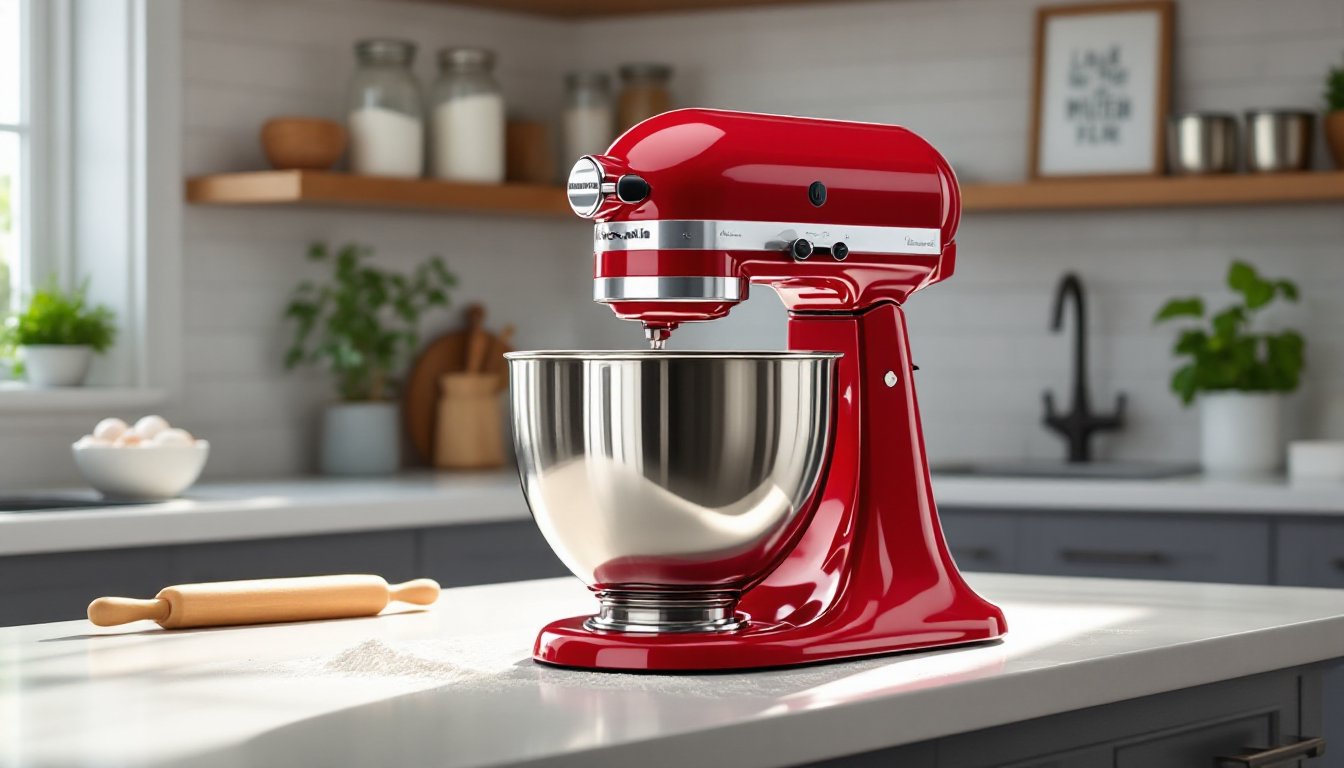
The KitchenAid Artisan stand mixer has sat on kitchen counters for decades, earning its spot through performance rather than hype. It’s a workhorse that kneads bread dough without walking across the counter, whips meringue to stiff peaks without overheating, and handles everything from pizza dough to macarons. Whether someone’s hunting for a kitchenaid mixer sale or deliberating between models, the Artisan hits a sweet spot of capacity, power, and price that works for serious home bakers without requiring professional-grade investment. This guide walks through what makes this tilt-head stand mixer worth the counter space, how it stacks up against other KitchenAid models, and what to know before buying.
Table of Contents
ToggleKey Takeaways
- The KitchenAid Artisan mixer features a 325-watt direct-drive motor and 5-quart capacity that makes it ideal for home bakers, offering the right balance between power, price, and counter space.
- Its tilt-head design and power hub attachment port provide superior versatility compared to competitors, allowing you to transform the mixer into a pasta roller, meat grinder, spiralizer, or food processor.
- The all-metal construction with metal gears ensures durability and longevity that far exceeds budget models—many Artisan mixers from decades ago still function perfectly today.
- The Artisan efficiently handles everyday baking tasks like kneading bread dough, whipping meringues to stiff peaks, and creaming butter for cookies without the heavy-duty investment of professional-grade models.
- Simple maintenance including periodic beater-clearance checks, hand-washing attachments, and using a fitted cover will keep your KitchenAid Artisan mixer running smoothly for years.
- Available in over 40 colors and backed by a 10-year warranty, the Artisan offers both aesthetic customization and reliable protection on your investment.
What Makes the KitchenAid Artisan Mixer a Kitchen Essential
The KitchenAid Artisan stand mixer distinguishes itself from budget models and KitchenAid’s own lineup through a combination of build quality, versatility, and proven longevity. Unlike entry-level mixers that struggle with stiff dough or overheat during extended mixing, the Artisan’s 325-watt motor delivers consistent torque across a wide range of tasks.
The tilt-head design makes this model more accessible than bowl-lift versions. Users can lift the motor head with one hand to swap beaters or scrape down the bowl, a practical advantage when working through multi-step recipes. The mechanism locks firmly during operation, eliminating wobble even at higher speeds.
What sets the stand mixer kitchenaid apart from competitors is the power hub attachment port. This single feature transforms the mixer into a pasta roller, meat grinder, vegetable spiralizer, or food processor. No other mixer at this price point offers the same breadth of compatibility with manufacturer-approved attachments. That modularity means the Artisan grows with a cook’s skills rather than becoming obsolete.
The all-metal construction, including gears, matters for durability. Plastic gears in cheaper mixers strip under load, especially with dense dough. KitchenAid’s metal drivetrain handles heavy tasks without degradation, which explains why secondhand Artisan mixers from the 1990s still turn up at estate sales in working condition.
Compared to the KitchenAid Classic stand mixer, the Artisan adds a quart of capacity and a more powerful motor. Against the KitchenAid Professional mixer (a bowl-lift model), the Artisan trades some heavy-duty capacity for easier operation and a smaller footprint. For home bakers working with typical recipe batches, that’s often the right trade-off.
Key Features and Specifications You Should Know
Motor Power and Performance
The 325-watt direct-drive motor in the Artisan delivers power efficiently. Unlike belt-driven mixers that lose torque through mechanical slippage, the direct-drive system transfers energy straight to the beaters. This design keeps the motor cooler during extended mixing sessions, important when kneading bread dough for 10 minutes or whipping cream for frosting.
The 10-speed slide control provides precise adjustment. Speed 1 (stir) slowly incorporates dry ingredients without creating flour clouds. Speed 2 (slow mix) works for mashing and heavier batters. Speeds 4–6 handle creaming butter and sugar or mixing cake batters. Speeds 8–10 tackle whipping and aerating tasks. The planetary mixing action, where the beater rotates around the bowl while also spinning, ensures thorough coverage. The beater reaches 59 points inside the bowl with each rotation, leaving fewer unmixed pockets than two-beater designs.
Compared to the kitchenaid mixer professional series (which typically features 500–600 watt motors), the Artisan handles standard home recipes without issue but may slow slightly when working with triple batches of dense dough. For most users, that limitation never surfaces in regular use.
Capacity and Bowl Design
The 5-quart stainless steel bowl handles enough dough for two standard loaves of bread, nine dozen cookies, or seven cups of mashed potatoes. That capacity fits the sweet spot for home baking, large enough for holiday cookie batches but not so oversized that small recipes get lost in the bowl.
The bowl features a comfortable handle and pour spout, practical details that matter when transferring batter or dough. The stainless steel construction won’t chip, stain, or retain odors, and it’s dishwasher-safe.
KitchenAid offers optional glass bowls with measurement markings for the Artisan. These work well for visual learners who want to track ingredient quantities but add weight and fragility. The standard stainless steel bowl proves more durable for daily use.
The kitchenaid 5 qt mixer capacity puts the Artisan between the Classic (4.5 quarts) and the Professional 600 (6 quarts). According to comparison data on stand mixer capacity, that size handles most home baking tasks without requiring the counter space and storage of larger commercial-style models.
Choosing the Right Color and Style for Your Kitchen
KitchenAid produces the Artisan in more than 40 colors, from classic white and black to limited-edition seasonal hues. This variety lets buyers match existing kitchen palettes or make the mixer a design focal point.
Practical considerations should guide color selection. Dark colors (Onyx Black, Empire Red) hide scuffs and staining better than light finishes. White and cream finishes show flour dust and splatter but give kitchens a clean, cohesive look when coordinated with white cabinetry or appliances. Metallic finishes (Brushed Nickel, Medallion Silver) split the difference, they camouflage minor wear while reflecting kitchen lighting.
Limited-edition colors carry premium pricing but don’t affect performance. A Pistachio or Cornflower Blue Artisan works identically to the standard Imperial Red model. The markup pays for exclusivity, not engineering.
Buyers should consider finish durability based on use patterns. Painted finishes can chip if the mixer gets moved frequently or if attachments get swapped carelessly. The metal construction underneath remains intact, but visible chips bother some owners. Metallic finishes show fewer cosmetic flaws over time.
From a resale perspective, neutral colors (white, black, silver) hold value better than trendy hues. But since most Artisan mixers stay in service for decades, resale value matters less than daily satisfaction with the kitchen aesthetic.
The mixer’s footprint measures roughly 14 inches high, 8.7 inches wide, and 14 inches deep with the bowl in place. It weighs about 26 pounds, heavy enough to stay planted during operation but light enough for one person to move when needed. Counter space planning should account for the tilt-head clearance (about 16 inches total height when raised) if the mixer will live under cabinets.
What You Can Make with Your Artisan Mixer
The Artisan handles the full spectrum of mixing tasks home bakers encounter. The flat beater (included) creams butter and sugar, mixes cookie dough and cake batters, and mashes potatoes. The wire whip aerates egg whites for meringues, whips cream to stiff peaks, and creates light, fluffy frostings. The dough hook kneads bread dough, pizza dough, and pasta dough without the arm fatigue of hand-kneading.
For bread baking, the Artisan kneads up to eight cups of all-purpose flour worth of dough, enough for two standard loaves or one large batch of dinner rolls. The dough hook works gluten effectively at speeds 2–3, developing structure in 8–10 minutes. Users should watch for the motor straining (unusual noise, slowing rotation) when working with whole-grain or very stiff doughs, though this rarely occurs at standard hydration levels.
Cookie production becomes efficient with the Artisan. The mixer creams butter and sugar thoroughly, creating the air pockets needed for texture. It handles double or triple batches of most cookie recipes, limited more by bowl capacity than motor capability.
The mixer excels at cakes and frostings. The wire whip incorporates maximum air into batters, producing fine crumb structure. For buttercream frostings, it whips butter to light, spreadable consistency and integrates powdered sugar without creating dust storms (when started at low speed).
Beyond baking, the power hub attachments expand functionality. The pasta roller attachment produces fresh fettuccine or ravioli sheets. The food grinder handles meat for sausages or burgers. The vegetable sheet cutter creates uniform spirals from zucchini or potatoes. Some home cooks find these attachments transform kitchen workflow by consolidating multiple appliances into one system.
Whipped cream and meringues represent the upper end of the Artisan’s whipping capability. It brings heavy cream to stiff peaks in 2–3 minutes on speed 8. For Swiss or Italian meringues, it maintains the consistent speed needed while gradually incorporating hot sugar syrup, a task difficult to manage with handheld mixers.
Maintenance Tips to Keep Your Mixer Running Smoothly
The Artisan requires minimal maintenance but benefits from consistent care. After each use, detach and wash the bowl, beater, and shield (if using one). All these parts are dishwasher-safe, though hand-washing the bowl preserves its finish longer. The beaters should be dried immediately to prevent water spots.
The mixer body should be wiped down with a damp cloth, never submerged or sprayed directly with water. Moisture can infiltrate the speed control or motor housing. For stuck-on batter, a paste of baking soda and water works without scratching the finish. Avoid abrasive cleaners or steel wool on painted surfaces.
Beater-to-bowl clearance should be checked periodically. Over time, the beater may drift slightly higher or lower due to the adjustment mechanism settling. To test, place the flat beater in the bowl and observe the gap at the bottom. A dime should barely fit between the beater and bowl bottom. If the clearance is too wide (beater doesn’t reach ingredients) or too narrow (beater scrapes loudly), adjust the height screw on the motor head. Turn clockwise to lower the beater, counterclockwise to raise it. Make small quarter-turn adjustments and retest.
The attachment hub cover should stay in place when not using attachments. This keeps flour and debris out of the hub mechanism. If attachments become difficult to insert or remove, a light coating of food-grade mineral oil on the hub pin helps.
KitchenAid mixers are designed not to require internal lubrication during normal home use. The gears run in sealed grease that lasts for years. If grinding noises or unusual resistance develop, that indicates a problem requiring professional service rather than user maintenance.
Storage impacts longevity. Mixers kept on the counter stay ready for use but accumulate dust. A fitted cover prevents buildup. Mixers stored in cabinets should be positioned where they won’t get knocked or have items stacked against the motor head.
The 10-year warranty on the Artisan doesn’t cover every scenario, damage from misuse, accidents, or commercial use isn’t included. But manufacturing defects and motor failures typically are. Registering the mixer after purchase establishes the warranty start date. For those interested in seasonal home maintenance routines, adding “check mixer beater clearance” to an annual kitchen tune-up makes sense.
For users hunting a kitchenaid mixer sale clearance or kitchenaid stand mixer sale, buying refurbished units directly from KitchenAid provides warranty coverage while cutting costs. Third-party refurbishers vary in quality. When comparing best kitchenaid mixer options across the product line, the Artisan balances features and price for most home users, while the Professional models make sense for those regularly baking in large volumes. The kitchenaid mixer sizes range from 3.5-quart mini models to 8-quart commercial units, but the 5-quart Artisan covers the middle ground that fits most kitchens and recipes.