
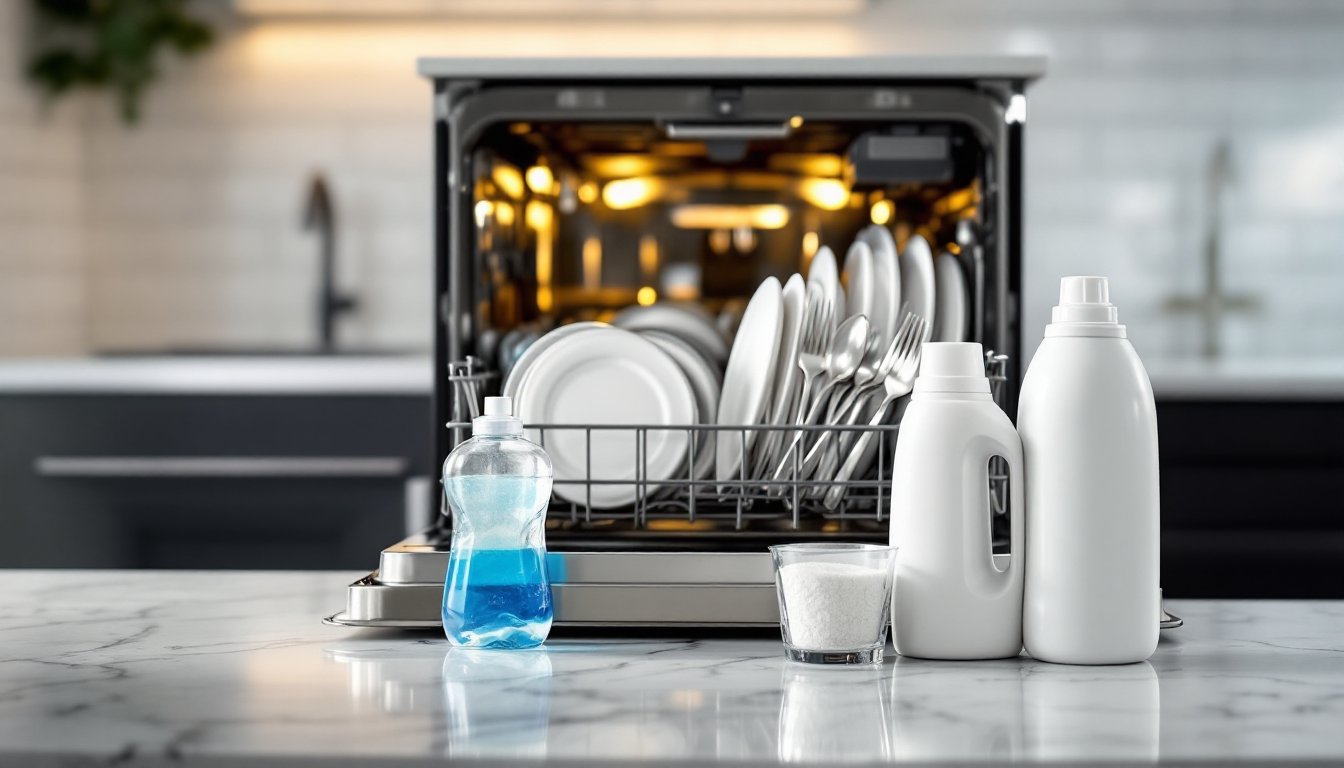
A dishwasher is only as good as the detergent you put in it. Load it with the best machine, select the optimal cycle, and still end up with cloudy glasses or crusty plates if the soap isn’t up to the job. With the explosion of eco-friendly formulas, non-toxic options, and specialty solutions for hard water, choosing the right dishwasher detergent has become more complex than grabbing whatever’s on sale. This guide cuts through the marketing claims to identify what actually works, whether you’re fighting mineral buildup, avoiding harsh chemicals, or just want reliably clean dishes without the guesswork.
Table of Contents
ToggleKey Takeaways
- Enzymes, surfactants, and chelating agents are the core components that make the best dishwasher detergent effective, with chelating agents being essential for hard water (above 7 grains per gallon).
- Dishwasher pods offer the best balance of convenience and performance, while powder remains the most economical option at $0.08–$0.15 per load compared to $0.35–$0.50 for premium pods.
- Water hardness is the single biggest factor in choosing the right dishwasher detergent—test your water with an inexpensive strip and use a separate rinse aid if you have hard water.
- Non-toxic options like Seventh Generation Free & Clear and Blueland tablets provide effective eco-friendly cleaning with minimal packaging for environmentally conscious households.
- Avoid common mistakes like using too much detergent, storing pods in humid conditions, overloading your dishwasher, or skipping rinse aid, which undermines even premium detergent formulas.
- Regular dishwasher maintenance—including monthly filter cleaning and citric acid cleaning cycles—is just as important as selecting a quality detergent for optimal cleaning results.
What Makes a Dishwasher Detergent Effective?
Effective dishwasher soap does more than remove visible food debris. It must cut through grease, dissolve baked-on starches, neutralize hard water minerals, and rinse clean without leaving residue or film, all while working within the specific temperature and cycle constraints of residential dishwashers.
Enzymes are the workhorses in most quality formulas. Proteases break down protein-based soils like eggs and cheese, while amylases tackle starches from pasta and rice. Lipases handle fats and oils. A detergent lacking enzyme diversity will struggle with mixed loads.
Surfactants reduce water’s surface tension, allowing the detergent to spread and penetrate stuck-on food. Look for formulas that balance cleaning power with low-sudsing properties, too many bubbles can interfere with spray arm action and prevent proper rinsing.
Chelating agents (like citric acid or phosphonates) bind to calcium and magnesium in hard water, preventing spots and film. If you have hard water (above 7 grains per gallon), this ingredient is non-negotiable. Some premium dishwasher detergent pods include built-in rinse aids and degreasers in separate chambers for staged release during the wash cycle.
Phosphate-free formulas have been the standard since the late 2000s due to environmental regulations, but this means modern detergents rely more heavily on enzymes and oxygen-based bleaches to compensate. Most perform well, though extremely hard water may still benefit from a supplemental rinse aid.
Types of Dishwasher Detergents: Pods, Powder, and Gel
Pods
Dishwasher detergent pods (also called pacs or tablets) are pre-measured, single-use units wrapped in dissolvable film. They typically contain layered formulas, detergent, rinse aid, and sometimes a degreaser, that release at different stages of the cycle.
Pros: Convenient, no measuring, consistent dosing, and often include rinse aid. Best dishwasher pods from testing labs consistently rank high for cleaning performance.
Cons: Higher cost per load, less flexibility for lightly soiled loads, and the film may not fully dissolve in short or low-temperature cycles. Store them in a dry place, moisture can cause the wrapper to stick or degrade.
Powder
Powder detergent is the old-school option, but it remains a solid performer. It dissolves quickly and works well in hard water when formulated with adequate chelating agents.
Pros: Adjustable dosing (use less for light loads, more for tough jobs), typically the most economical per wash, and no concerns about wrapper dissolution. Some users prefer powder for control over ingredient exposure.
Cons: Can clump if exposed to humidity, requires proper measuring, and may leave residue if the dispenser doesn’t open fully or water pressure is weak.
Liquid and Gel
Liquid dishwasher detergent and gels are less common than pods or powder but still available. They dissolve easily and work in all water temperatures.
Pros: Flexible dosing, pre-dissolves quickly, and easier to rinse out of the dispenser cup than powder.
Cons: Generally lower cleaning power than pods or powder due to reduced enzyme stability in liquid form. More prone to over-sudsing if you accidentally pour too much. Bottle design can make precise measuring difficult.
For most households, dishwasher pods offer the best balance of convenience and performance, while powder wins for those on a budget or dealing with variable load sizes.
Top-Rated Dishwasher Detergents for Every Need
Best Overall Performance
For consistent results across grease, starches, and proteins, Cascade Platinum Plus pods lead the pack in independent testing. The ActionPacs contain a triple-chamber design with enzymes, a grease-fighting agent, and a built-in rinse aid. They handle hard water well and leave minimal spotting on glassware.
Another strong contender is Finish Quantum Ultimate. These tablets include a bleach component that excels at whitening and stain removal on ceramic and plastic items. If you frequently wash coffee-stained mugs or tea-stained cups, the oxygen bleach makes a visible difference.
For those prioritizing non-toxic dishwasher detergent, look for certifications like EPA Safer Choice or USDA BioPreferred. Seventh Generation Free & Clear pods are plant-based, fragrance-free, and phosphate-free while still delivering solid cleaning on everyday loads. They’re a proven choice for households avoiding synthetic fragrances and dyes.
Blueland Dishwasher Tablets offer an eco-friendly option with minimal packaging, tablets arrive in compostable wrappers. Performance is reliable for light to moderate soil, though heavily baked-on food may require a pre-rinse. Kitchen organization enthusiasts often favor refillable systems like these to reduce waste.
Best Budget-Friendly Option
Store-brand powders and generic pods have improved dramatically. Kirkland Signature (Costco) Premium Dishwasher Pacs consistently match name-brand pods at half the cost per load. They include rinse aid and enzymes, and perform well in both soft and moderately hard water.
For powder users, Lemi Shine Original is a budget-friendly natural dishwasher detergent made with citric acid. It’s especially effective in hard water regions and doubles as a dishwasher cleaner when run through an empty cycle monthly.
If you need a best dishwasher detergent for hard water without very costly, add a separate rinse aid (like Finish Jet-Dry) to any budget detergent. The combination typically outperforms premium products used alone in high-mineral water.
How to Choose the Right Detergent for Your Dishwasher
Water hardness is the single biggest factor. Test your water with an inexpensive hardness test strip (available at hardware stores or online). If you’re above 7 grains per gallon, prioritize detergents with chelating agents or add a rinse aid separately. Some municipal water reports list hardness, check your utility’s website.
Dishwasher age and model matter. Older machines (pre-2013) often have longer, hotter cycles that can handle any detergent type. Newer Energy Star-rated models use less water and lower temperatures, making clean dishwasher detergent formulas with cold-water enzymes essential. Check your owner’s manual, some manufacturers recommend against powder in low-water models due to incomplete dissolution.
Household sensitivities may steer you toward non-toxic dishwasher pods or fragrance-free options. Look for formulas free of synthetic dyes, chlorine bleach, and phosphates. Certifications like Leaping Bunny (cruelty-free) or B Corp can guide eco-conscious buyers, though performance testing should still be the priority.
Load types influence the best format. If you run small, lightly soiled loads frequently, liquid or powder allows you to use less per wash. Heavily soiled pots and pans benefit from the concentrated enzyme levels in premium pods. For mixed households, keeping both a powder (for everyday) and pods (for tough jobs) is a practical approach similar to how many DIYers keep multiple grades of sandpaper or different brush sizes.
Cost per load varies widely. Calculate it by dividing the package price by the number of washes. Budget pods can run $0.15–$0.25 per load, while premium options hit $0.35–$0.50. Powder typically ranges $0.08–$0.15. Over a year (assuming 280 loads), the difference between a $0.10 powder and a $0.40 pod is about $84, worth considering if performance is comparable for your water and machine.
Common Dishwasher Detergent Mistakes to Avoid
Using too much detergent is the most frequent error. More soap doesn’t mean cleaner dishes, it leads to residue, cloudy film, and can even damage door seals over time as excess suds leak out. Pods are pre-measured, but if you’re using powder or dishwasher liquid, follow the manufacturer’s guidelines (usually 1–2 tablespoons for standard loads).
Storing detergent improperly degrades performance. Pods exposed to humidity will clump or dissolve prematurely. Keep them in a sealed container in a cool, dry spot, not under the sink where leaks and moisture accumulate. Powder should stay in an airtight container, much like you’d store drywall compound or joint tape to prevent hardening.
Skipping rinse aid when you have hard water is like skipping primer before painting, you can do it, but the results will disappoint. Even if your detergent claims to include rinse aid, supplementing with a separate rinse aid in the dedicated dispenser improves drying and reduces spots. Refill it monthly or when the indicator light signals.
Overloading the dishwasher prevents water and detergent from reaching all surfaces. Spray arms need clear paths, and dishes should never block the detergent dispenser door. If you’re cramming in “just one more plate,” you’re likely setting yourself up for a re-wash. Home organization principles apply here, less is often more effective.
Ignoring dishwasher maintenance sabotages even the best dishwasher soap. Clean the filter monthly (it’s usually a twist-out basket at the bottom), wipe down door seals, and run a cleaning cycle with a dishwasher cleaner or citric acid every 1–2 months. A clogged filter or mineral-caked spray arms will undermine any detergent’s performance.
Mixing detergent types in the same load (like adding powder on top of a pod) doesn’t improve cleaning and can cause over-sudsing. Stick with one type per cycle. If a load comes out dirty, troubleshoot the machine, water temperature, or loading technique before doubling up on detergent.
Finally, using hand dish soap in a dishwasher is a rookie mistake that creates a kitchen flood of bubbles. Hand soaps are formulated to generate suds: dishwasher detergents are specifically low-sudsing. If you accidentally use hand soap, stop the cycle immediately, scoop out as much foam as possible, and run multiple rinse cycles. It’s a mess that takes longer to clean up than any dish.