
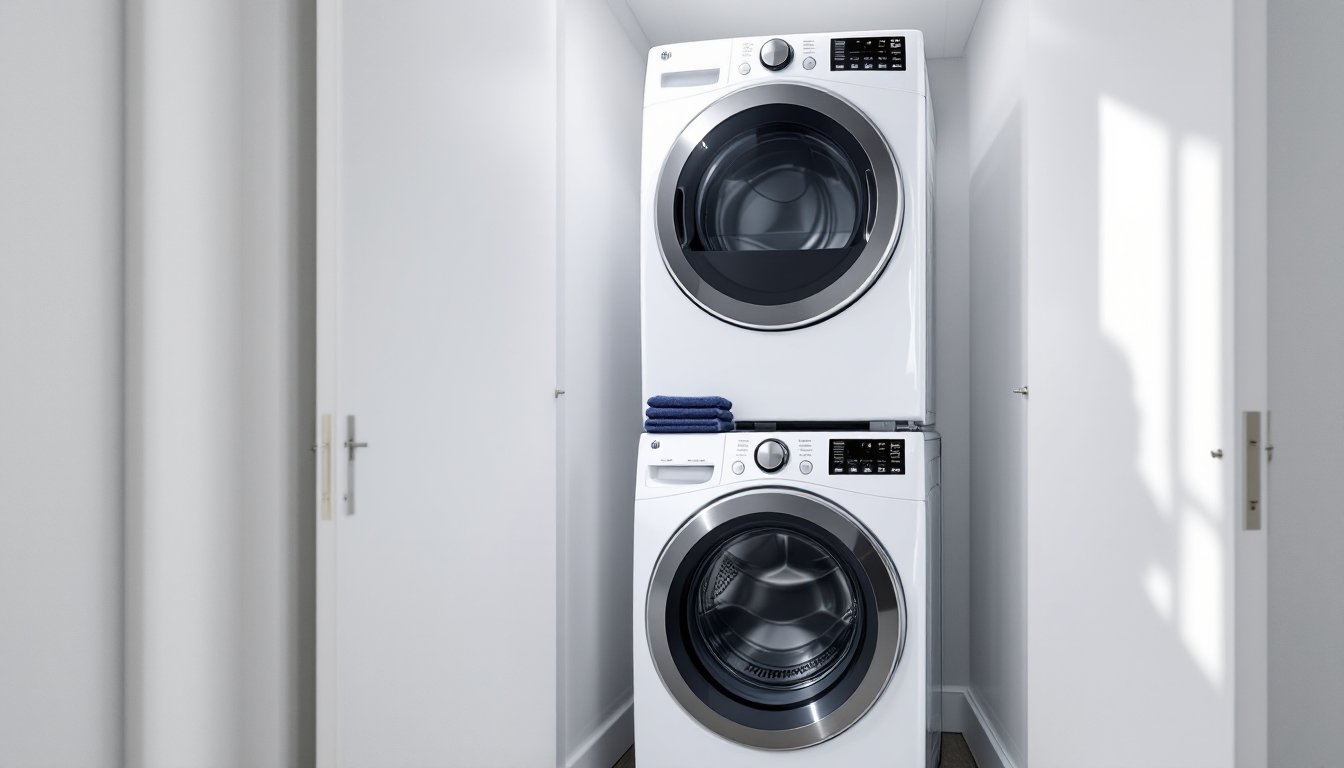
Cramped laundry closet? Tight apartment? An LG stackable washer and dryer might be the most practical upgrade you make this year. These vertical units free up floor space without sacrificing capacity or performance, and LG’s lineup consistently ranks among the most reliable on the market. Whether you’re converting a closet into a functional laundry zone or replacing an old side-by-side set, this guide walks you through model options, installation requirements, and long-term costs, with no sales pitch, just the facts you need to make a smart buy.
Table of Contents
ToggleKey Takeaways
- An LG stackable washer and dryer reduces laundry footprint from 50–60 inches wide to just 27–30 inches, making it ideal for small apartments and tight spaces without sacrificing capacity or performance.
- Unlike combo units, LG stackable washers and dryers use separate machines mounted vertically, allowing you to wash and dry simultaneously—a key efficiency advantage for busy households.
- LG’s direct-drive motors carry a 10-year warranty and feature Wi-Fi-enabled ThinQ integration for remote cycle monitoring, reducing the need to physically check on loads.
- Proper installation requires accurate measurements of width (27–30 inches), depth (30–34 inches), and height (75–80 inches), plus verification of electrical (240V for electric dryers), water, and ventilation requirements.
- Mid-tier LG stackable models (WM4000HWA + DLE7150W) offer the best value at $1,400–$1,800, combining TurboWash technology, sensor drying, and proven reliability without the premium price of integrated WashTower units.
- Monthly maintenance—cleaning the washer gasket, clearing lint filters, and inspecting hoses—is essential to extend lifespan to 12–15 years and prevent costly repairs.
Why Choose an LG Stackable Washer and Dryer for Your Home?
LG stackable units make sense in three scenarios: you’re working with limited square footage, you want modern features in a compact footprint, or you’re setting up a secondary laundry area in a condo or basement. Unlike a combo washer dryer that handles both tasks in one drum, usually with longer cycle times and smaller loads, a stacked washer dryer combo uses separate machines mounted vertically, so you can wash and dry simultaneously.
Space efficiency is the obvious win. A typical front load washer and dryer set sits side-by-side and occupies roughly 50-60 inches of width. Stack them, and you’re looking at a footprint around 27-30 inches wide and 75-80 inches tall, depending on the model. That’s laundry functionality in the same floor space as a small closet.
LG’s track record also matters. Their direct-drive motors carry a 10-year warranty, and their LG ThinQ washer and dryer models integrate Wi-Fi for remote cycle monitoring and diagnostics. That’s not lifestyle fluff, it’s useful when you’re upstairs and want to know if a load finished without walking down to check. For homes with tight hallways or awkward doorways, reversible doors and stacking kits simplify installation in ways older models don’t.
Top LG Stackable Washer and Dryer Models to Consider
LG offers several configurations, from budget-friendly pairs to premium 2 in 1 washer and dryer towers. Here’s what’s worth your attention in 2026.
WashTower (WKE100HVA / WKG101HVA): This is LG’s integrated single-unit stack, washer on bottom, dryer on top, with a shared control panel at eye level. It’s 27 inches wide, holds 4.5 cubic feet in the washer and 7.4 in the dryer, and uses heat pump drying for efficiency. The trade-off: it’s pricier than buying separates, and if one unit fails, the whole tower is out of commission. Still, it’s the cleanest install option for modern builds where aesthetics and space matter equally.
WM4000HWA (washer) + DLE7150W (dryer): A solid mid-tier pairing. The washer is a front load washer with TurboWash technology (cuts cycle time by up to 30 minutes), and the dryer uses sensor drying to prevent over-drying. Stacked, they’re about 76 inches tall. This combo typically lands around $1,400-$1,800, making it a practical pick for homeowners who want LG reliability without the WashTower premium.
Compact models (WM1455HWA + DLEC855W): At 24 inches wide, these qualify as a small washer and dryer set designed for tight closets or European-style installations. Capacity drops to 2.3 cubic feet (washer) and 4.2 cubic feet (dryer), so they’re best for singles, couples, or light laundry loads. Ventless dryer options exist here, which helps if you can’t run ductwork.
If you’re hunting for washer and dryer bundles under $500, you won’t find new LG stackables in that range. Budget-conscious buyers should look at scratch-and-dent outlets, refurbished units, or consider less expensive brands. LG’s value proposition centers on durability and features, not rock-bottom pricing.
Installation Requirements and Space Considerations
Before you buy, confirm your space can physically accommodate a stacked unit, and that your home’s utilities can support it. Most installations are straightforward for a competent DIYer, but electrical work often requires a licensed electrician, especially if you’re adding a 240V circuit.
Utilities you’ll need:
- Water supply: Standard ¾-inch cold and hot hookups. Most washers include inlet hoses: replace them every five years to prevent ruptures.
- Drain: A standpipe (at least 18 inches tall, code-compliant) or laundry sink. Check your local plumbing code, some jurisdictions require an air gap or backflow preventer.
- Electrical: Gas dryers need a 120V outlet for controls and a gas line (typically ½-inch diameter). Electric dryers require a dedicated 240V, 30-amp circuit with a 4-prong outlet (NEMA 14-30). Older homes may have 3-prong: you’ll need an adapter or an outlet upgrade to meet current NEC standards.
- Ventilation: Most dryers need a 4-inch duct vented to the outside. Minimize bends, use rigid metal duct (not flexible foil), and cap total run under 25 feet per manufacturer specs. Ventless heat-pump dryers exist but cost more upfront.
Measuring Your Space Properly
Don’t eyeball this. Grab a tape measure and record three dimensions: width, depth, and height. Stackable washer and dryer dimensions vary, but standard LG pairs need:
- Width: 27-30 inches (add 1 inch on each side for clearance)
- Depth: 30-34 inches (measured from the wall, including hoses and ducts)
- Height: 75-80 inches stacked (check ceiling height and any overhead ductwork or lighting)
Also measure doorways and hallways along the delivery path. Front-load washers are heavy (150-200 lbs), and you can’t always tip them on their side without damaging internal components. If you’re installing in a closet, ensure the doors can fully open (or consider bi-fold or sliding doors).
Stacking kits, usually sold separately, bolt the dryer to the washer and include a pull-out shelf. Don’t skip this: an unsecured dryer can shift during spin cycles, especially on upper floors. Installation is DIY-friendly if you’re comfortable with basic hand tools, but many appliance retailers offer delivery and setup for $100-$200, which includes leveling, hookup, and haul-away of your old units.
Key Features That Make LG Models Stand Out
LG’s engineering separates it from generic stackable options. These aren’t gimmicks, they’re features that reduce cycle time, prevent damage to fabrics, and simplify troubleshooting.
TurboWash and TurboSteam: TurboWash uses high-pressure nozzles to cut wash time without sacrificing cleaning power, helpful when you’re running back-to-back loads. TurboSteam injects steam mid-cycle to reduce wrinkles and refresh clothes, which beats tossing items back in the dryer with a damp towel.
AI Fabric Sensing (on select models): The LG all in one washer dryer and premium standalone units use weight and moisture sensors to auto-adjust cycle settings. It’s not magic, just good engineering that prevents over-washing or under-drying.
SmartDiagnosis and ThinQ integration: When something goes wrong, SmartDiagnosis uses your smartphone’s microphone to listen to the machine’s error tones and delivers a diagnostic report in seconds. ThinQ connectivity lets you start, pause, or monitor cycles remotely, genuinely useful for homeowners managing energy use during peak-rate hours.
Inverter Direct Drive motor: Unlike belt-driven units, LG’s direct-drive motor mounts directly to the drum, reducing vibration and mechanical failure points. It’s quieter and backed by a 10-year parts warranty. If you’re installing near bedrooms or living spaces, the noise difference is noticeable.
NeveRust stainless steel drums: The washer drum and dryer drum are stainless, not coated steel or plastic. They don’t chip, rust, or snag fabrics, even after years of hard use.
Maintenance Tips to Keep Your LG Stack Running Smoothly
Stackable units are reliable, but neglect the basics and you’ll shorten their lifespan, or worse, face a costly service call that could’ve been prevented.
Monthly tasks:
- Clean the washer gasket and dispenser: Front-loaders trap moisture in the rubber door seal. Wipe it down after every few loads, and once a month, run a cleaning cycle with washer cleaner or white vinegar to prevent mold and odors.
- Check and clear the lint filter: The dryer’s lint trap should be cleared after every load. Once a month, vacuum behind the screen housing to remove fine lint buildup.
Quarterly tasks:
- Inspect water hoses: Look for cracks, bulges, or rust on the crimped ends. Replace hoses every five years, even if they look fine. Use braided stainless-steel hoses for added burst protection.
- Clean the dryer vent duct: Disconnect the duct from the dryer (unplug the machine first), and use a dryer vent brush or shop vac to remove lint from the full run. Clogged vents are a fire hazard and kill efficiency. If you’re uncomfortable with appliance maintenance tasks, hire a pro, it’s a $100-$150 service.
Annually:
- Inspect the stacking kit: Check that bolts are tight and the shelf mechanism (if present) operates smoothly. Vibration can loosen hardware over time.
- Run a washer tub-clean cycle: Most LG washers have a dedicated “Tub Clean” setting. Use it with a washer cleaner tablet to remove detergent residue and biofilm.
What to avoid:
- Overloading: A front-load washer should be filled no more than three-quarters full. Overloading strains the motor, increases wear on the drum bearings, and prevents proper cleaning.
- Using too much detergent: High-efficiency (HE) washers need HE detergent, and less of it. Excess suds leave residue and contribute to odors.
- Ignoring error codes: If the display shows an error, don’t just restart the machine. Use SmartDiagnosis or consult the manual. Small issues (like a clogged drain filter) can escalate into expensive repairs if ignored.
Cost Comparison: Is an LG Stackable Set Worth the Investment?
LG stackable sets aren’t cheap, but they’re not luxury appliances either. Understanding upfront cost, operating expenses, and lifespan helps frame the value.
Upfront pricing (as of 2026):
- Budget-tier separates (WM3400CW + DLE3400W): ~$1,000-$1,200 as a pair. Basic features, reliable performance, no smart connectivity.
- Mid-tier (WM4000HWA + DLE7150W): ~$1,400-$1,800. TurboWash, ThinQ, sensor drying.
- WashTower (integrated unit): ~$2,000-$2,400. Premium build, streamlined install, heat-pump efficiency.
- Compact models: ~$1,600-$2,000 for the pair. Niche sizing, often ventless.
If you’re shopping washer and dryer set sale events (Memorial Day, Black Friday, Labor Day), expect 10-20% off retail. Retailers also bundle free delivery, installation, or haul-away during promotions.
Operating costs: Energy Star-certified LG models use roughly 13-15 gallons of water per load (vs. 23+ for older top-loaders) and 0.15-0.20 kWh per load for the washer. Electric dryers consume 2-4 kWh per cycle, depending on load size and settings. Over a year, that’s about $60-$100 in combined water and electricity for a household running 6-8 loads weekly. Heat-pump dryers (like the WashTower) cut dryer energy use by up to 50%, but add $300-$500 to the purchase price.
Lifespan and warranty: With proper maintenance, LG washers and dryers last 12-15 years. The direct-drive motor warranty covers 10 years on parts: standard parts and labor warranties run 1 year. Extended warranties are available but often not necessary given LG’s reliability track record.
Best stackable washer dryer for value? For most homeowners, the mid-tier pair (WM4000HWA + DLE7150W) hits the sweet spot: proven reliability, modern features, and a price that doesn’t require financing. The WashTower is worth it if you value aesthetics, efficiency, and a clean install in a visible space. Avoid cheap washer and dryer set options from unfamiliar brands, you’ll pay the difference in repairs and early replacement.
Compare that to a mini washer and dryer or portable combo unit (often under $1,000 but with 1.5 cu ft capacity), and the LG investment makes sense for anyone doing regular, full-size laundry. Stackables deliver the capacity and performance of a traditional side-by-side set in half the floor space, and that’s exactly what tight homes need.