

In a universe filled with billions of stars, one might assume the night sky outnumbers the trees on Earth. Surprisingly, recent estimates suggest otherwise. With over three trillion trees thriving across the globe, the question arises: are there really more trees than stars? This intriguing comparison not only sparks curiosity but also highlights the importance of our planet’s forests.
Trees play a crucial role in sustaining life, providing oxygen, and supporting ecosystems. As scientists delve deeper into this topic, they uncover fascinating insights about the sheer volume of trees and their vital contributions. Understanding the balance between celestial bodies and terrestrial life can reshape how we view our environment and its preservation. So, let’s explore the numbers and the implications behind this captivating question.
Overview of Trees and Stars
Trees and stars serve as fundamental components of Earth’s and the universe’s ecosystems. Estimates suggest there are over 3 trillion trees on Earth, significantly contributing to biodiversity and climate regulation. The potential for trees to serve critical ecological functions is unparalleled.
In contrast, the Milky Way contains approximately 100 billion to 400 billion stars, while the entirety of the observable universe houses around 2 trillion galaxies. Each galaxy contains billions to trillions of stars, indicating an immense quantity of celestial bodies.
The comparison between trees and stars highlights the richness of terrestrial life. Trees provide essential benefits such as carbon sequestration, habitat for wildlife, and resources for human use. Stars, while numerous, mainly point to the vastness of space, with limited direct impact on life on Earth. This perspective fosters an appreciation for the importance of trees in sustaining life and maintaining ecological balance.
The Science Behind Tree Count
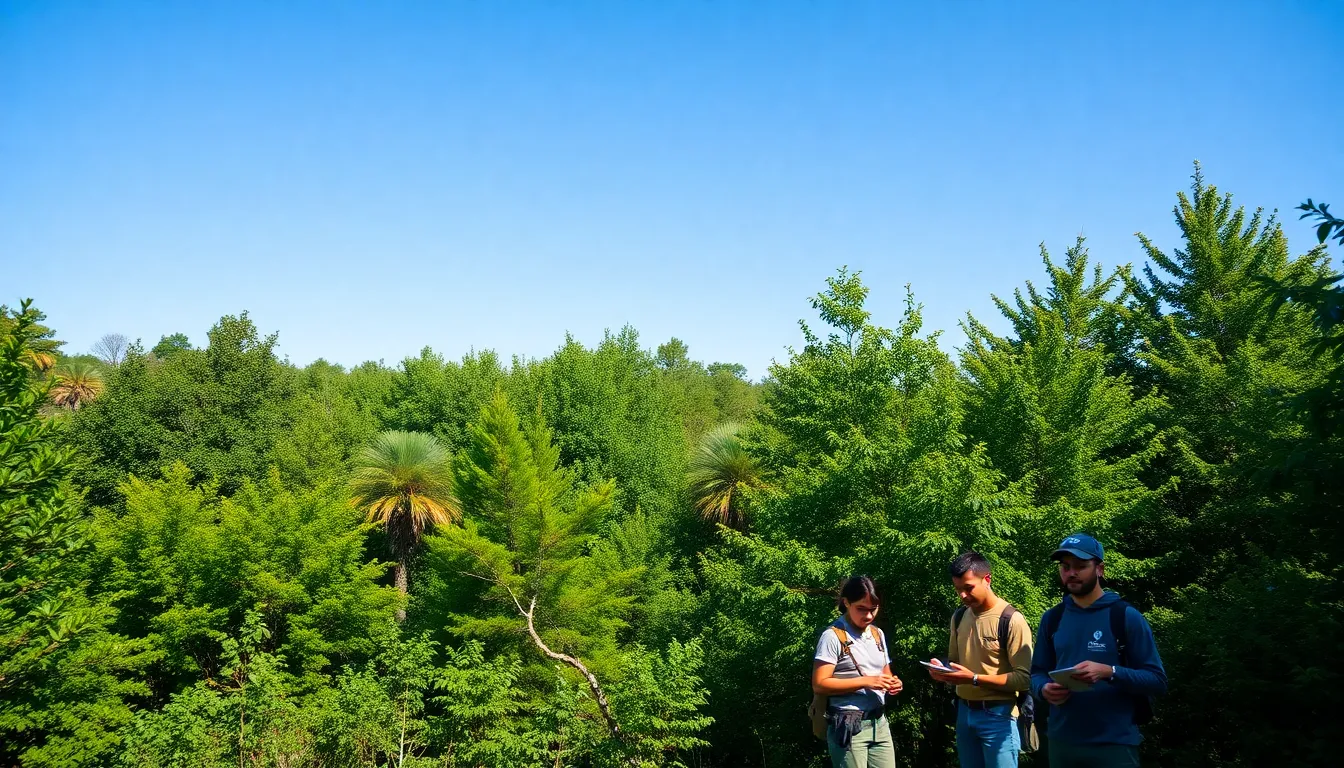
Estimating the number of trees on Earth involves extensive research and innovative methodologies. Scientists have developed comprehensive techniques to achieve more accurate counts, considering various factors.
Estimating Global Tree Numbers
Estimations indicate there are over three trillion trees worldwide. A significant study led by scientists at Yale University used satellite imagery and ground-based data to conduct this assessment. Researchers sampled vast areas to measure tree density in multiple forest types. They extrapolated these findings to global scales, thus providing a more precise estimate of tree numbers than previously thought.
Factors Affecting Tree Population
Several factors influence tree populations, including:
- Climate: Temperature, precipitation, and seasonal changes directly affect tree growth and distribution.
- Soil Quality: Nutrient-rich soil promotes healthier tree growth, while poor soils limit tree survival rates.
- Human Activity: Deforestation for agriculture, urban development, and logging significantly reduces tree counts.
- Natural Disasters: Events like wildfires, hurricanes, and pest infestations can devastate tree populations swiftly.
- Conservation Efforts: Reforestation and afforestation initiatives can enhance tree counts, promoting ecological restoration.
Understanding these factors helps in assessing and supporting tree populations across the globe.
The Count of Stars in the Universe
The number of stars in the universe is astronomically high, with estimates often exceeding a septillion (1 followed by 24 zeros). Understanding the scale of this vastness requires examining the composition of our galaxy and the methods used to estimate these figures.
The Vastness of the Milky Way
The Milky Way galaxy contains between 100 billion and 400 billion stars. Dense clusters of stars populate regions such as the galactic core, while spiral arms host younger stars. Each star system varies, featuring binary stars, which include two stars orbiting a common center. The immense scale of the Milky Way is just a fraction of the universe, emphasizing how numerous stars truly are in comparison to terrestrial entities.
Estimating the Total Number of Stars
Estimating the total number of stars involves sophisticated mathematical models and observations. Astronomers often utilize methods like star counting in known areas and extrapolating the data to estimate totals for the entire galaxy. The Hubble Space Telescope and advanced computer simulations contribute to this understanding by mapping star distribution and light intensity across various regions. Studies suggest that the observable universe contains about 2 trillion galaxies, each contributing extensively to the overall star count.
Comparing Trees and Stars
The comparison between the number of trees and stars reveals fascinating insights into Earth’s ecology versus the cosmic expanse. Researchers continue to explore this relationship, offering new findings that enhance understanding.
Recent Studies and Findings
Recent studies indicate that Earth houses over three trillion trees, a figure derived from comprehensive research methodologies. A significant 2015 study by Yale University employed satellite imagery combined with field data to yield the most accurate tree estimates. This research found that the tree population is affected by various factors, including human activity, land use changes, and natural disasters like wildfires and storms. Advanced models and technologies provide insight into how environmental conditions influence tree survival and growth. These findings reflect the intricate connections between biodiversity and climate, underlining the importance of ongoing research in forestry and conservation.
The Implications of the Comparison
The implications of comparing trees and stars extend beyond numbers. While estimates suggest there are more trees than stars in our galaxy, trees’ ecological roles are critical for sustaining life on Earth. They contribute oxygen, enhance biodiversity, and sequester carbon, mitigating climate change and supporting ecosystems. In contrast, stars, despite their vast presence, provide no direct ecological benefits. This juxtaposition emphasizes the need to prioritize environmental stewardship and conservation efforts, ensuring the preservation of forests and their functions amid rapid urbanization and climate challenges. Understanding this comparison can inspire greater appreciation for trees and their invaluable contributions to the planet’s health.
The revelation that trees may outnumber stars invites a deeper appreciation for Earth’s natural wonders. Trees are not just abundant; they are vital for life as they support ecosystems and combat climate change. Their role in providing oxygen and habitats cannot be overlooked.
As humanity faces increasing environmental challenges, recognizing the significance of trees becomes essential. The comparison serves as a reminder of the urgent need for conservation efforts. By prioritizing the protection and restoration of forests, society can ensure a healthier planet for future generations. Trees are more than mere numbers; they are the foundation of life on Earth.